Finding bed bugs early is the difference between a contained problem and a whole-home infestation. The insects are flat, fast, and photophobic — they hide in cracks thinner than a credit card and usually only venture out when you are still. In my years reporting on residential inspections, the people who succeed are not the ones with the best eyesight; they are the ones who search the right places in the right order with simple tools.
This step-by-step guide shows you how to find bed bugs in a US bedroom: what tools to grab, where to look first, what evidence counts even when you never see a live bug, and how to document what you find. For identifying what bed bugs look like at each life stage, pair this search with our visual identification guide.
Tools You Need Before You Start
- Strong flashlight — phone LED works; a focused beam is better for seams and cracks.
- Credit card or stiff plastic card — scrape along seams to expose hidden bugs and eggs.
- White sheet or paper — place under furniture legs to catch falling debris during inspection.
- Magnifying glass (optional) — helps confirm nymphs and eggs pinhead-sized.
- Sticky tape or small zip bags — to capture a specimen for confirmation without crushing it.
- Gloves — optional; reduces contamination and makes handling easier.
Inspect when you have 30–45 minutes of quiet time. Bed bugs are more active in darkness, but a thorough daytime search with a flashlight is still effective.
Step 1: Strip the Bed — But Do Not Remove the Mattress Yet
Remove sheets, pillowcases, and comforter. Inspect each layer on a light-colored surface:
- Blood spots — small rust or red dots (fed bugs crushed or excrement)
- Fecal spots — dark pinpoints that smear reddish-brown when dampened
- Live bugs, eggs, or shed skins — especially along piping and tags
Place suspect bedding in sealed bags until laundered on hot dry cycle if infestation is confirmed.
Step 2: Search the Mattress and Box Spring Seams
Work top to bottom, slow and systematic:
- Run your card along every seam, label, and button on the mattress surface and sides.
- Lift the mattress slightly and check the bottom edge where it meets the box spring.
- Flip or tilt the box spring and inspect fabric underside — staples and corners are hot spots.
- Check zippered encasements if installed; bugs trapped inside may still be visible through fabric.
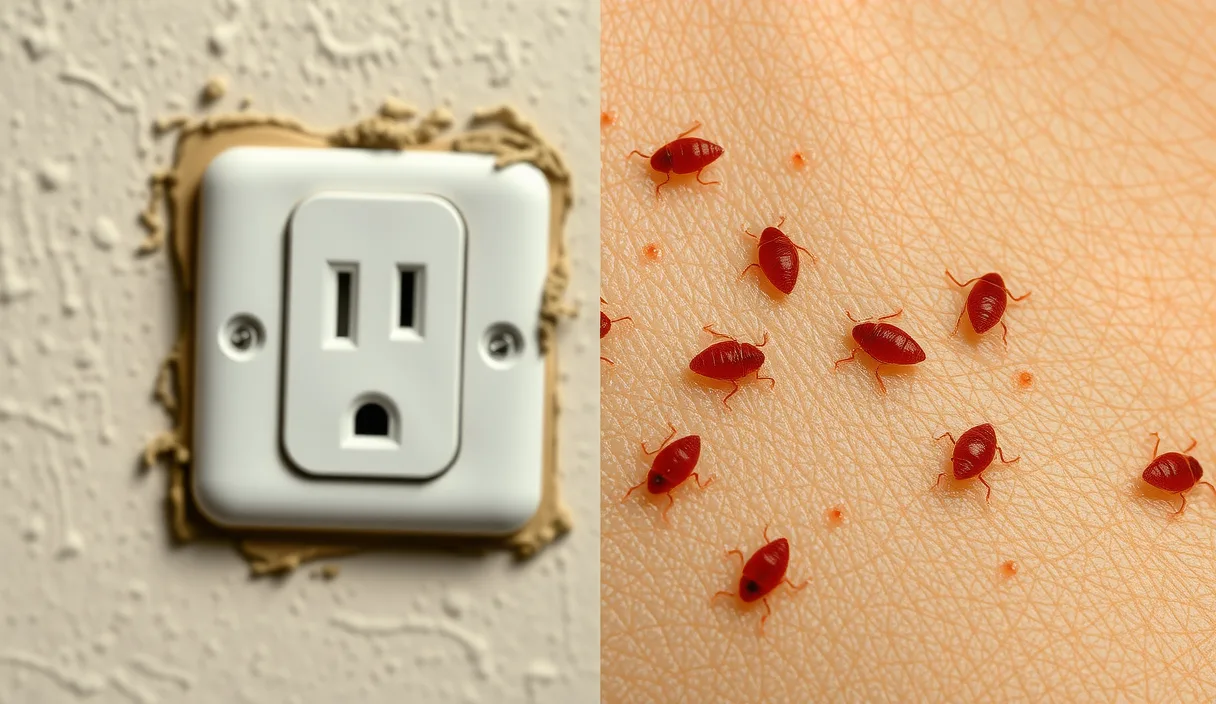
Adult bed bugs are about apple-seed sized (4–5 mm), reddish-brown when fed, tan when unfed. Nymphs are smaller and paler. Eggs are white, oval, and glued in clusters.
Step 3: Headboard, Bed Frame, and Nightstands
Bed bugs prefer to stay within roughly 8 feet of where people sleep. Inspect:
- Headboard joints, screw holes, and wall mounting brackets
- Bed frame rails, slats, and caster wheels
- Nightstand drawers, bottom panels, and lamp cords touching the bed
- Picture frames, clocks, and outlet covers above or beside the headboard
Use the flashlight at a low angle — shadows in cracks reveal flat bodies.
Step 4: Couches and Secondary Sleeping Areas
If anyone sleeps on a sofa or recliner, treat it as a primary harbor. Remove cushions, unzip covers, and card along every seam. Bed bugs often colonize couches when infestations grow beyond the bedroom.
Step 5: Walls, Baseboards, and Perimeter
When populations rise, bugs retreat into wall voids. Look for:
- Dark fecal spotting on baseboards and wall corners behind the bed
- Cracks where carpet meets wall
- Loose wallpaper edges and peeling paint near sleeping areas
Do not open electrical plates unless you are qualified — note suspicious spots and mention them to a pest professional.
Step 6: Closets and Luggage Near the Bed
Check luggage stored under the bed, hanging bags with straps touching the frame, and piles of clothing on the floor. Bed bugs hitchhike on fabric and can hide in closet corners without feeding for months in cool conditions.
Signs You Found Bed Bugs (Even Without Seeing One)
Confirmation does not require catching a live insect. Multiple indicators together are strong evidence:
- Clustered bites in lines or zigzags on exposed skin
- Fecal spotting on mattress seams or headboard
- Shed skins (empty translucent shells) in creases
- Sweet-musty odor in heavy infestations
Single isolated spots may be inconclusive — keep searching or consult a professional inspector.
How to Find Bed Bugs in a Hotel Room (Quick Version)
Before unpacking, leave luggage in the bathroom. Pull back sheets at the head of the bed and card the mattress seam near the pillow line. Check the headboard and luggage rack. If you see spotting or a live bug, request a new room far from the original — not just an adjacent unit.
What to Do After You Find Them
- Photograph evidence with a coin for scale.
- Do not spray random insecticides — improper use spreads bugs and creates resistance.
- Bag and heat-treat or launder bedding and worn clothing.
- Consider mattress encasements, interceptors on bed legs, and professional treatment for established infestations.
- Notify landlords promptly if you rent — many states have disclosure and treatment timelines.
Common Search Mistakes
- Checking only the mattress top — most bugs hide in seams, frame, and headboard.
- Moving furniture before inspecting — disturbs bugs and spreads evidence.
- Assuming absence because daytime search failed — repeat at night with flashlight if bites continue.
- Confusing carpet beetles or fleas — capture a specimen or compare with a visual ID guide.
Bottom Line
Learning how to find bed bugs means searching systematically where they actually live — not just glancing at sheets. Start at the bed core, expand to furniture and walls, and document fecal spots and skins even if live bugs escape view. Early detection keeps treatment smaller, cheaper, and faster.
Related guides — different questions
These articles cover overlapping topics but answer different questions. Pick the one that matches your situation.
- How to Identify Bed Bugs: Complete Visual Guide
Read if: You need a master reference for identifying bed bugs at every life stage.
- Early warning signs of bed bug infestation
Read if: Something feels wrong but you have not spotted a bug yet.
- How to identify bed bug eggs on white sheets
Read if: You are inspecting bedding tonight with a flashlight.
Frequently Asked Questions
What are signs of bed bugs in luggage after travel?
After travel, check luggage and nearby areas for bed bug signs such as tiny brown spots (fecal marks), pale shed skins, small eggs or eggshells, and live or flattened bugs. Early detection can help prevent establishing an infestation in your home.
How can I confirm bed bugs are gone after treatment?
Use a combination of monitoring methods over several weeks.
- Place interceptors on bed legs and check for trapped insects.
- Inspect common hiding spots with a flashlight and magnifier if available.
- Look for new cast skins, tiny dark spots (fecal stains), or live bugs.
Continue monitoring and follow up with your pest professional if signs return.
How long do bed bugs live without a blood meal?
Bed bugs can survive several months without feeding, though many live closer to 5–6 weeks under typical home conditions. Factors like temperature, humidity, and life stage influence their survival time.
Are bed bugs active during the day?
Bed bugs are primarily nocturnal and prefer to feed at night. However, they can become active during the day if hungry, crowded, or if their nighttime host schedule changes.