If you’ve ever woken up with an itchy scalp and immediately worried about bed bugs, you’re not alone. Many people assume these pests can burrow into hair just like lice or ticks. The short answer is no—bed bugs are not biologically equipped to live in human hair or on the scalp. However, they can briefly wander there, and the confusion between bed bug bites and other scalp conditions often leads to unnecessary panic. This article explains exactly why bed bugs avoid hair, what to look for instead, and how to handle any situation where a bed bug ends up near your head.
Why bed bugs cannot live in hair or on the scalp
Bed bugs (Cimex lectularius) are ectoparasites that feed exclusively on blood, but their anatomy and behavior make them poorly suited for living in hair. Unlike head lice, which have claw-like legs adapted to grip individual hair shafts, bed bugs have flat, broad bodies and legs designed for crawling on smooth surfaces like mattress seams, headboards, and baseboards. Their legs lack the specialized hooks needed to cling to hair as it moves or during scratching. Additionally, bed bugs are nocturnal and prefer to hide in dark, undisturbed crevices near their host—not in the warm, constantly moving environment of a scalp. The scalp’s temperature, oil production, and frequent movement make it an inhospitable hiding place. Even if a bed bug crawls onto your scalp during feeding, it will typically retreat immediately after its meal to a nearby crack or fold.
Key anatomical differences from lice
- Leg structure: Lice have curved claws that match the diameter of human hair; bed bugs have simple tarsi with claws designed for flat surfaces.
- Body shape: Lice are elongated to move between hairs; bed bugs are oval and flattened, which helps them fit into thin cracks, not hair strands.
- Egg attachment: Lice glue their nits to hair shafts near the scalp; bed bugs lay eggs in clusters on rough fabrics, wood, or paper—never on hair.
Can bed bugs crawl into hair temporarily?
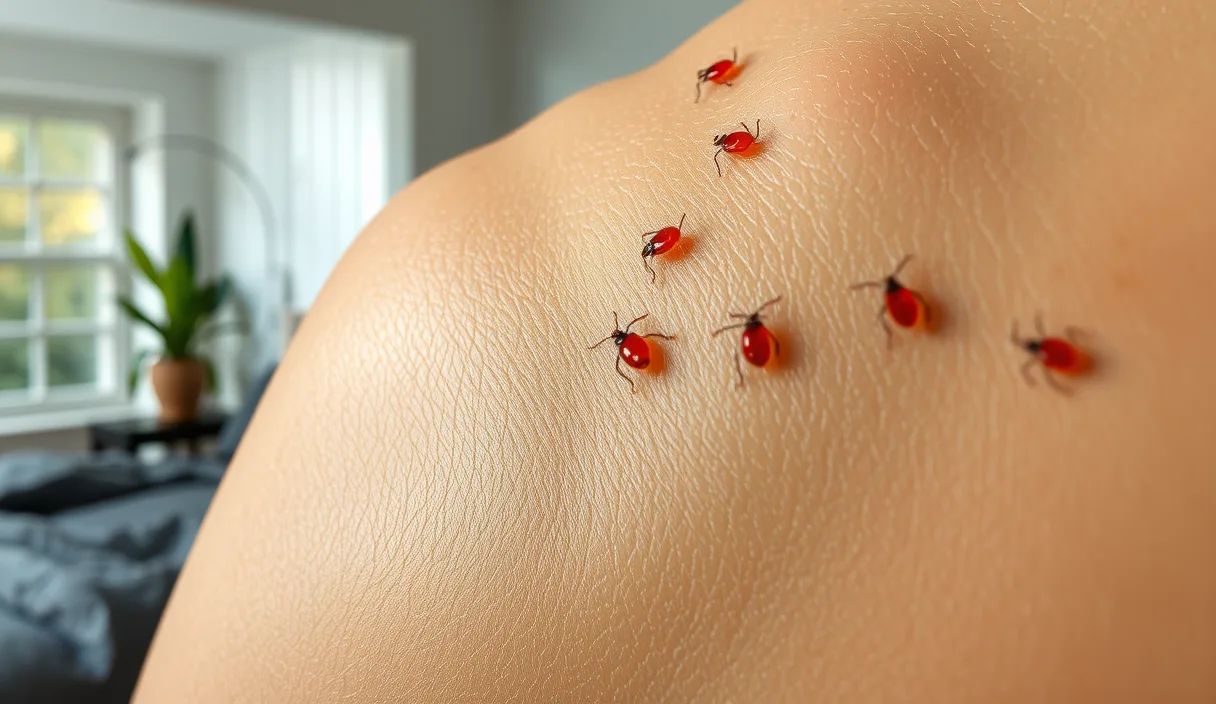
Yes, a bed bug can crawl onto your scalp or into your hair for a short time while feeding. This usually happens if you sleep with your head near an infested headboard or pillow. The bug crawls onto exposed skin, feeds for 5–10 minutes, and then leaves. You may feel a tickling sensation or wake up with a bite on your neck, face, or scalp. However, the bug will not stay there. It has no reason to remain—it cannot hide effectively in hair, cannot lay eggs there, and cannot travel with you during the day because hair movement and grooming dislodge it. If you find a small, reddish-brown insect in your hair after sleeping, it is far more likely to be a bed bug that fed and was accidentally trapped in your hair while you moved, not one that took up residence.
Common scalp conditions mistaken for bed bugs
Because bed bug bites on the scalp are rare, most itching or bumps on the head are caused by other conditions. Mistaking these for bed bugs leads to wasted time and incorrect treatments. Below is a comparison of the most common culprits.
| Cause | Key signs | Typical location on scalp | |
|---|---|---|---|
| Head lice | Pediculus humanus capitis | Nits (eggs) glued to hair shafts; live lice visible; intense itching behind ears and nape | Throughout scalp, especially nape and behind ears |
| Seborrheic dermatitis | Yeast overgrowth (Malassezia) | Greasy, yellowish scales; redness; flaking without live insects | Scalp, eyebrows, sides of nose |
| Folliculitis | Bacterial or fungal infection of hair follicles | Small, pus-filled bumps; tenderness; sometimes crusting | Anywhere on scalp, often in clusters |
| Allergic reaction | Shampoo, hair dye, or fabric softener | Red, itchy welts that appear hours after exposure; no insects or eggs | Areas of direct contact |
| bed bug bites (rare on scalp) | Cimex lectularius | Small, red, itchy welts in a line or cluster; no insects in hair; blood spots on pillow | Face, neck, shoulders—rarely on scalp itself |
If you see tiny white specks that are hard to remove from hair, those are likely nits from head lice, not bed bug eggs. Bed bug eggs are about 1 mm long, white, and oval, but they are laid on surfaces like mattress seams, not on hair. You will never find a bed bug egg attached to a hair shaft.
How to confirm if bed bugs are in your bed
Instead of inspecting your hair, focus on your sleeping area. Bed bugs leave clear signs that are visible to the naked eye. Follow these steps to check your mattress and bedding properly.
- Strip the bed completely. Remove all sheets, pillowcases, and mattress protectors. Examine the seams, tufts, and folds of the mattress with a bright flashlight.
- Look for live bugs. adult bed bugs are about the size of an apple seed, reddish-brown, and oval. Nymphs are smaller and pale yellow. They move slowly and avoid light.
- Check for fecal spots. These are small, dark, rust-colored stains on mattress seams, headboards, or sheets. They look like ink spots and smear when touched with a damp cloth.
- Find eggs or shed skins. Eggs are tiny, white, and sticky. Cast skins (exoskeletons) are translucent and resemble the bug’s shape. Both are found in crevices, not on hair.
- Inspect the headboard and bed frame. Remove the headboard from the wall. Check behind it, inside screw holes, and along the frame. Bed bugs often hide in these areas, not on your body.
If you find any of these signs, you have a bed bug infestation. If you find nothing but still have scalp itching, consider other causes like lice, dandruff, or an allergic reaction to laundry detergent.
What to do if you find a bed bug in your hair
Although it is rare, you might discover a bed bug crawling in your hair after waking up. Do not panic. Take these immediate steps:
- Remove the bug carefully. Use a fine-tooth comb or your fingers to pick it out. Place it in a sealed plastic bag or container for identification.
- Shower and wash your hair. Regular shampoo and warm water will remove any bed bugs that are on your scalp. No special insecticidal shampoo is needed—bed bugs cannot survive submersion in water.
- Wash your bedding and pajamas. Use hot water (at least 120°F / 49°C) and dry on high heat for at least 30 minutes. This kills all life stages.
- Inspect your sleeping area thoroughly. Follow the checklist above to locate the source. If you find evidence of infestation, begin treatment immediately or call a licensed pest control professional.
- Do not apply pesticides to your hair or scalp. Products designed for lice are not effective against bed bugs and may cause skin irritation. Bed bugs are not living in your hair, so treating your scalp is unnecessary.
Preventing bed bugs from reaching your head while sleeping
If you suspect bed bugs but have not confirmed an infestation, you can take simple precautions to keep them away from your face and scalp. These measures are not a substitute for professional treatment, but they reduce the chance of bites while you investigate.
- Move your bed away from the wall. Bed bugs often travel along walls and baseboards. Pulling the bed 6 inches from the wall makes it harder for them to reach you.
- Use a bed bug encasement. Cover your mattress and box spring with a zippered, bed bug-proof cover. This traps any bugs already inside and prevents new ones from entering.
- Keep bedding off the floor. Tuck sheets and blankets so they do not touch the floor. Bed bugs climb up from the floor onto bedding.
- Wear a hair cap or tie hair up. While this will not stop a determined bed bug, it reduces the surface area they can crawl onto. A smooth, tight cap makes it harder for them to grip.
- Inspect your pillowcase each morning. Look for small blood spots or dark fecal specks. These indicate that a bed bug fed on your head or neck during the night.
Frequently asked questions about bed bugs and hair
Can bed bugs lay eggs in human hair?
No. Bed bugs lay eggs only on rough, stationary surfaces like fabric seams, wood, or cardboard. The eggs are coated with a sticky substance that adheres to these materials but cannot bond to hair shafts. If you find white specks in your hair, they are almost certainly nits from head lice or flakes of dandruff.
Do bed bugs prefer hair over other body parts?
No. Bed bugs prefer exposed skin that is easy to reach. They typically bite the face, neck, arms, and hands. Hair acts as a barrier, making it harder for them to feed. Bites on the scalp are uncommon and usually occur only if the hair is very thin or if the person sleeps with hair spread across a pillow that is heavily infested.
Can bed bugs travel from one person’s hair to another?
No. Bed bugs do not live on hosts like lice do. They do not jump, fly, or transfer through head-to-head contact. They crawl from hiding places to a host, feed, and return to their hiding spot. The only way a bed bug could move between people is if it crawled onto clothing or bedding that was then shared.
Will washing my hair get rid of bed bugs?
Washing your hair with regular shampoo and warm water will remove any bed bugs that are on your scalp at that moment. However, it will not eliminate an infestation in your home. The bugs are hiding in your mattress, bed frame, or furniture, not on your body. Focus on treating your sleeping area, not your hair.
Should I use lice shampoo for bed bugs?
No. Lice shampoos contain insecticides like permethrin or pyrethrins that are designed for lice, not bed bugs. They are not effective against bed bugs and can cause scalp irritation or allergic reactions. If you need to treat a bed bug infestation, use products labeled for bed bugs on your mattress and furniture, following the label directions exactly. For your hair, plain shampoo and water are sufficient.
Your next practical steps
If you are worried about bed bugs in your hair, the first thing to do is inspect your sleeping area using the checklist above. Look for live bugs, fecal spots, eggs, or shed skins on your mattress, headboard, and bed frame. If you find any signs, begin treatment immediately—either with a thorough cleaning, encasements, and diatomaceous earth, or by hiring a licensed pest control operator. If you find no signs but still have scalp itching, see a dermatologist or primary care doctor to rule out lice, seborrheic dermatitis, or allergies. Do not waste time treating your hair for bed bugs. They simply do not live there. Focus your energy on the places they actually hide, and you will solve the problem much faster.
Frequently Asked Questions
How long do bed bugs live without a blood meal?
Bed bugs can survive several months without feeding, though many live closer to 5–6 weeks under typical home conditions. Factors like temperature, humidity, and life stage influence their survival time.
How can I confirm bed bugs are gone after treatment?
Use a combination of monitoring methods over several weeks.
- Place interceptors on bed legs and check for trapped insects.
- Inspect common hiding spots with a flashlight and magnifier if available.
- Look for new cast skins, tiny dark spots (fecal stains), or live bugs.
Continue monitoring and follow up with your pest professional if signs return.
Are bed bugs active during the day?
Bed bugs are primarily nocturnal and prefer to feed at night. However, they can become active during the day if hungry, crowded, or if their nighttime host schedule changes.
What are signs of bed bugs in luggage after travel?
After travel, check luggage and nearby areas for bed bug signs such as tiny brown spots (fecal marks), pale shed skins, small eggs or eggshells, and live or flattened bugs. Early detection can help prevent establishing an infestation in your home.