Finding bed bug eggs on white sheets can feel like searching for a grain of salt on a snowbank. These tiny, pearl-white specks are barely visible to the naked eye, yet spotting them early is your best chance at stopping a full-blown infestation. This article walks you through exactly what to look for, how to distinguish eggs from common debris, and what to do when you find them.
What Bed Bug Eggs Look Like on White Fabric
Bed bug eggs are roughly 1 millimeter long, about the size of a pinhead or a single grain of table salt. On white sheets, they appear as barely visible whitish or pale-yellow specks. The challenge is that they do not contrast sharply against white fabric as they would against dark colors. Instead, you must rely on shape, texture, and placement to identify them.
Each egg has an elongated oval form, slightly asymmetrical with one end more pointed than the other. Fresh eggs have a translucent, almost pearl-like sheen. Older eggs turn a dull off-white or faint yellowish color. The surface is smooth and slightly glossy under direct light. The most telling characteristic is that bed bug eggs are cemented to the fabric by a sticky secretion the female applies during laying. They do not brush off easily. If you run your finger over a suspected spot and the speck moves freely, it is almost certainly not an egg.
Under magnification, you may notice a small cap-like structure at one end — the operculum — which is where the nymph emerges when it hatches. Hatched eggs appear as empty shells with a distinct opening, often still cemented in place. These empty casings are just as important to spot because they confirm that live bed bugs have already emerged and are now hiding elsewhere.
Common Lookalikes That Trigger False Alarms
Even experienced pest control technicians occasionally have to double-check a speck. The following table breaks down what you are most likely to confuse with bed bug eggs on white sheets, and how to tell them apart.
Lookalike Appearance on White SheetsHow to Distinguish Dandruff or dry skin flakesIrregular edges, flat, often curledFlakes brush or blow away easily; no sticky residue Fabric lint or pillingFuzzy clumps with no uniform shapeLint can be rolled into a ball; not cemented to fabric Dried detergent clumpsCrystalline white powder, irregular shapeDissolves on wet finger; no resistance when wiped Mold or mildew sporesPowdery patches, often clusteredWipes off as powder; leaves a stain on fabric Glue or adhesive residueShiny, clear or yellowish blobsIrregular shape; no defined oval form or cementing Systematic Inspection Techniques for White Bedding
Successful detection requires a methodical approach because the eggs are so small and can hide in the tiniest crevices of the fabric. Here is the step-by-step process that pest control professionals use during initial inspections.
- Strip the bed completely. Remove all bedding — fitted sheet, flat sheet, pillowcases, mattress protector, and any decorative covers. Lay each piece flat on a hard, well-lit surface like a tile floor or a large white table. Do not stack them, as eggs can transfer between layers.
- Use the right light source. Overhead ceiling lights create shadows that hide eggs. Use a bright LED flashlight and hold it at a 45-degree angle to the fabric. This side-lighting technique makes translucent eggs reflect light and stand out against the white background. A headlamp with adjustable brightness also works well because it keeps both hands free for manipulation.
- Get close to the fabric. Place your face 6 to 10 inches from the fabric. A magnifying glass with 10x to 30x magnification is ideal for confirmation, but many smartphones with a macro lens mode work well too. Take a photo and zoom in to examine suspicious specks without straining your eyes.
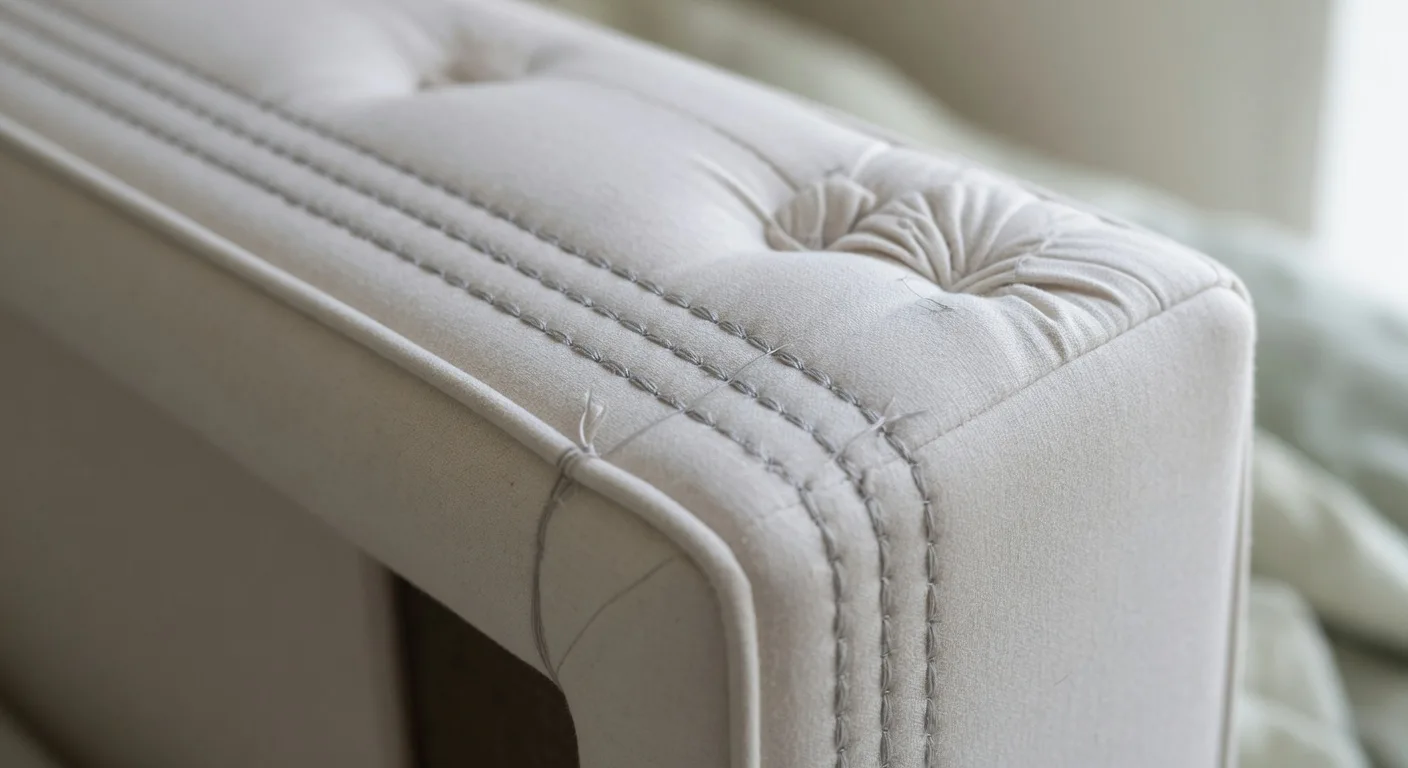
- Focus on seams and folds. Female bed bugs prefer to lay eggs in protected areas. Check the stitched seams of the sheets, the elastic corners of fitted sheets, inside pillowcase folds, and along any sewn-in brand tags or care labels. These areas provide the darkness and shelter that bed bugs seek.
- Run your fingers slowly along creases. Eggs often get trapped in the deep wrinkles left from sleeping. Slide your finger along each fold and feel for tiny bumps that do not move. Your sense of touch can detect eggs that your eyes might miss, especially in low-contrast conditions.
- Use clear packing tape as a sampling tool. Press a strip of tape firmly over a suspected area, then lift it gently. Eggs will adhere to the tape, making them easy to examine under magnification without damaging them. This method also allows you to preserve evidence for a pest control professional to confirm.
Where to Look Beyond the Sheet Surface
White sheets are your primary inspection zone, but bed bug eggs rarely stay only on the visible fabric surface. Female bed bugs lay eggs in the most protected spots near where humans rest. If your sheet inspection turns up nothing, or if you find eggs on the sheets, expand your search to these locations immediately.
- Mattress seams and piping. Run a credit card or a stiff piece of plastic along the edge of the mattress to dislodge eggs hidden deep in the seam. This mechanical action helps expose eggs that are tucked away and not visible to the naked eye.
- Box spring dust cover. Lift the fabric covering the underside of the box spring and shine your flashlight into the dark cavity below. This area is a favorite hiding spot for bed bugs because it offers protection and proximity to the sleeping person above.
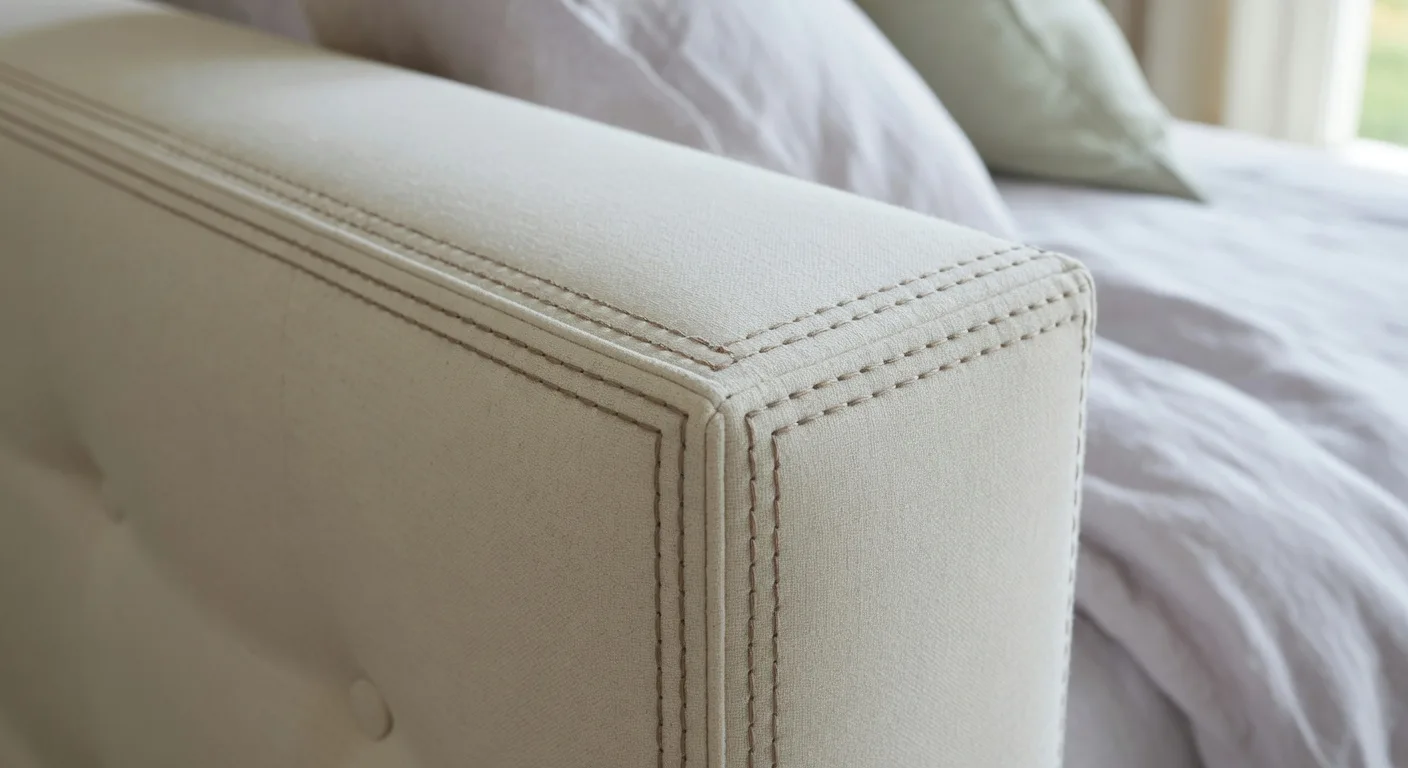
- Headboard and bed frame. Check screw holes, wooden joints, and gaps between slats. Eggs can be deposited in tiny cracks you would not think to look in. Use a flashlight and mirror to inspect hard-to-see areas behind the headboard.
- Baseboards near the bed. Run your tape sampler along the top edge of baseboards and behind any loose carpet or flooring. Bed bugs often travel along baseboards after feeding, and females may stop to lay eggs in these transitional spaces.
- Nightstand drawers and furniture joints. Pull out drawers completely and inspect the underside and the interior corners. Flip small pieces of furniture over for a thorough check. Pay special attention to screw holes and dowel joints where eggs can accumulate.
- Curtains and upholstery near the bed. If the bed is close to a window or upholstered chair, inspect the fabric folds and seams. Eggs can travel on clothing or luggage and end up in unexpected places.
Life Stages and What They Reveal About Infestation Age
Understanding the full life cycle helps you interpret what you find. If you spot bed bug eggs on white sheets, you can expect to find other stages nearby. The table below gives you a quick size reference so you do not mistake a hatched shell for a living bug.
Stage Approximate SizeColorKey Feature Egg1 mmPearl white to pale yellowCemented to surface; does not move First instar nymph1.5 mmTranslucent light tanVery slow crawl; barely visible movement Second to fifth instar nymphs2-4.5 mmLight to dark brownIncreasingly mobile; visible without magnification at later stages Adult4-5 mmReddish-brown after feedingFast moving; clearly visible to naked eye The presence of eggs alone suggests an infestation that is at least a few days old, since females require a blood meal before laying eggs. If you find nymphs alongside eggs, the infestation has been active for at least one to two weeks. Adult bed bugs indicate a mature population that has been established for several weeks or longer. This timeline is important because it determines the urgency and scale of your response.
How to Handle Confirmed Bed Bug Eggs on White Sheets
Finding even a single cluster of bed bug eggs on white sheets calls for immediate action. Eggs hatch in 6 to 10 days at normal room temperature, and each female can lay hundreds in her lifetime. However, not every situation requires professional treatment. Here is how to decide which path is right for you.
D-I-Y Steps That Actually Work
- Vacuum with a HEPA filter. Use the crevice tool to suction eggs from seams, folds, and mattress edges. Immediately remove the vacuum bag, seal it in a plastic bag, and dispose of it in an outside trash can. Vacuuming alone will not eliminate the infestation, but it reduces the egg count and removes debris that can hide eggs.
- Steam clean at high heat. Eggs die at 122°F (50°C) and above. A handheld steamer with a narrow nozzle can kill eggs on contact. Move the nozzle slowly over seams and folds, spending at least five seconds per area. Steam is effective because it penetrates fabric and reaches eggs in deep crevices that other methods miss.
- Wash bedding in hot water. Water temperature above 140°F (60°C) kills all life stages. Dry on the highest heat setting for at least 30 minutes. This combination of washing and drying provides a reliable method for treating infested sheets and clothing.
- Use mattress encasements. High-quality encasements trap any remaining bed bugs inside and prevent new eggs from being laid on the mattress surface. Leave the encasement on for at least one year to ensure all trapped bugs die of starvation.
When to Avoid D-I-Y and Call a Pro
D-I-Y methods are effective for small, localized infestations that you caught early. But if you find eggs in multiple locations beyond the bed, such as baseboards, furniture, or curtains, the infestation has spread beyond what you can handle alone. Professional exterminators use heat treatments, chemical applications, and canine inspections that reach every hidden egg. They also have access to commercial-grade equipment that generates consistent temperatures and applies pesticides in ways that are not available to consumers. Another sign that you need professional help is if you have tried D-I-Y methods for two weeks with no reduction in the number of eggs or live bugs you find.
Preventing Future Infestations After You Find Eggs
Once you have dealt with the immediate infestation, the next step is to prevent bed bugs from returning. Bed bugs are excellent hitchhikers and can re-infest a home through luggage, secondhand furniture, or guests' belongings. To reduce the risk of finding bed bug eggs on white sheets again, follow these preventive measures.
- Inspect secondhand furniture thoroughly. Before bringing any used furniture into your home, examine all seams, crevices, and joints with a flashlight. Pay special attention to upholstered items such as couches and chairs.
- Use protective covers on mattresses and box springs. Encasements with zippers that seal completely prevent bed bugs from accessing the mattress and box spring, eliminating their favorite hiding spots.
- Keep bedding off the floor. Bed bugs can climb up from the floor onto sheets. Elevate your bed frame and keep sheets and blankets tucked in so they do not touch the ground.
- Inspect hotel rooms when traveling. Pull back the sheets and check the mattress seams for eggs or bugs, especially in high-traffic hotels. Keep your luggage on a luggage rack rather than the floor or bed.
- Declutter your bedroom. Reduce the number of hiding spots by minimizing clutter under the bed, in closets, and around furniture. This makes future inspections easier and faster.
Frequently Asked Questions About Bed Bug Eggs on White Sheets
Can you see bed bug eggs with the naked eye?
Yes, but barely. Bed bug eggs are about 1 millimeter long, which is at the threshold of human vision. Most people need good lighting and close inspection to see them clearly. A magnifying glass or smartphone macro lens makes identification much easier and more reliable.
Do bed bug eggs look like salt or sand?
They can resemble coarse salt or fine sand, but there are important differences. Bed bug eggs have a smooth, oval shape with a slight sheen, while salt grains are cubic and sand particles are irregular. Additionally, bed bug eggs are cemented to the fabric, whereas salt and sand will brush away easily.
How long do bed bug eggs survive on sheets?
Eggs survive until they hatch, which typically occurs within 6 to 10 days at normal room temperatures. Cooler temperatures can extend the incubation period, but the eggs remain viable as long as they are not exposed to extreme heat or cold. Washing sheets in hot water or steaming them kills the eggs instantly.
What happens if you miss a single egg?
Missing one egg can restart the entire infestation. A single egg hatches into a nymph that, after a blood meal, matures into an adult that can lay hundreds more eggs. This is why thorough inspection and follow-up are critical. Even if you do not see eggs, continue checking your sheets weekly for at least a month after treatment.
Can bed bug eggs survive the washing machine?
It depends on the water temperature. Cold or warm water washing cycles may not kill eggs consistently because the adhesive cement helps them cling to the fabric. Hot water above 140°F (60°C) combined with high-heat drying for 45 to 60 minutes is the only reliable method for killing eggs in laundry. If you cannot guarantee hot water, use a commercial dryer on the highest heat setting for at least 30 minutes.
Do bed bug eggs fluoresce under blacklight?
How many eggs do bed bugs lay at once?
Female bed bugs lay one to five eggs per day, not in large clusters. Over her lifetime, a single female can lay 200 to 500 eggs. This means that finding even a few eggs on your sheets indicates an active infestation that will grow quickly if not addressed.
Can bed bug eggs be transferred from one room to another?
Yes. Eggs can stick to clothing, bedding, or furniture and be carried to other rooms. This is why it is important to isolate infested items and wash them in hot water before moving them. Vacuuming and sealing infested items in plastic bags also prevents the spread of eggs.
What is the best way to confirm bed bug eggs?
The best method is to use a magnifying glass or smartphone macro lens to examine the shape and texture. If you see an oval, pearl-white speck that is firmly attached to the fabric, it is likely a bed bug egg. For absolute confirmation, collect the specimen on clear tape and show it to a pest
Frequently Asked Questions
How do I identify bed bug bites vs other insect bites?
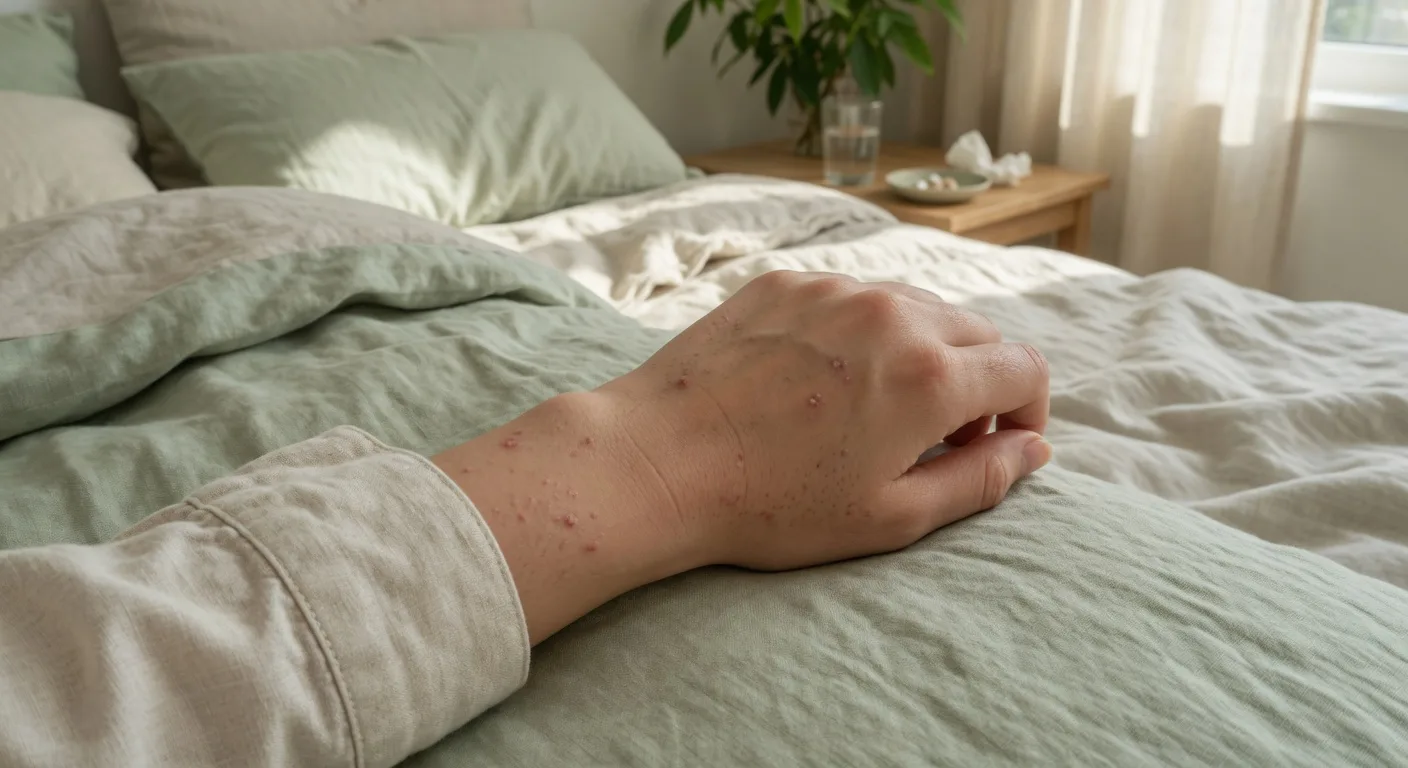
Bed bug bites often appear in a line or cluster, are intensely itchy, and may take a few days to show. Unlike flea bites, which are mainly around the ankles, bed bugs can occur on any exposed skin.
Common signs include small red bumps, possible swelling, and a central puncture mark. If you suspect bed bugs, capture a specimen or photograph bites and contact a pest professional for confirmation.
What does a bed bug infestation smell like?
Heavy infestations may produce a sweet, musty odor described as similar to berries or coriander. This scent comes from scent glands and is more noticeable when bugs are disturbed or clustered.
What are signs of bed bugs in luggage after travel?
After travel, check luggage and nearby areas for bed bug signs such as tiny brown spots (fecal marks), pale shed skins, small eggs or eggshells, and live or flattened bugs. Early detection can help prevent establishing an infestation in your home.
What do bed bug bites typically look like and how can I tell them apart?
Bed bug bites often appear as small, red, itchy bumps, usually in lines or clusters, but reactions vary. Other insects or skin conditions can look similar, so it’s best to consult a healthcare provider for an accurate assessment.
- Common signs include raised welts, mild swelling, and itchiness.
- Bites may appear on exposed skin, especially around arms, neck, or face during sleep.
- Track new patterns and avoid scratching to lower infection risk.
Only a qualified professional can confirm bed bugs through inspection and evidence, not bite appearance alone.
How can I identify an active bed bug infestation early?
Look for small blood spots on sheets, dark speck-like droppings, and tiny pale eggs or shed skins. A musty sweet odor can also signal a larger infestation.