Bed bugs crawl. They do not jump, and they do not fly. If you're seeing small insects leap or take wing in your bedroom, you're looking at fleas, carpet beetles, or something else entirely. Understanding this distinction matters because misidentification leads to wasted money on wrong treatments and delayed action on the real problem.
Why Bed Bugs Can't Leap or Take Flight
Bed bugs belong to the family Cimicidae, and their bodies evolved for one purpose: squeezing into tight cracks to hide near a sleeping host. I often see homeowners panic after spotting something darting across a pillow, assuming bed bugs can launch themselves through the air. They cannot.
adult bed bugs carry small, flat pads called hemelytral remnants where wings would develop in other insects. These stubs never functioned for flight in any bed bug species. Their legs lack the enlarged femora and elastic energy storage that fleas use to jump 100 times their body length. A bed bug's legs are thin, built for gripping rough surfaces like fabric weave and wood grain, not for propulsion.
Their flattened, oval shape helps them vanish into mattress seams and baseboard gaps. It also makes them aerodynamically useless. Nothing about their anatomy generates lift or thrust. When bed bugs need to cover distance, they walk at roughly three to four feet per minute on horizontal surfaces. Vertical climbing slows them, but they manage it on textured walls and furniture legs.
How They Spread Without Wings or Springs
Bed bugs compensate for immobility with patience and hitchhiking. In my field work, I've traced infestations across entire apartment buildings through wall voids, following electrical conduit paths that connect units. A single pregnant female can crawl from a neighboring unit through an outlet box gap and establish a new colony.
The more common vector is human transport. Bed bugs climb into luggage, purses, folded clothing, and secondhand furniture. They do not attach to skin or hair like lice—they wait for items to settle near their hiding spot, then crawl aboard. I've inspected hotel rooms where a guest's rolling suitcase sat against the bed for one night; bed bugs climbed up the wheels and nested in the fabric lining.
Used mattresses and sofas remain the highest-risk purchases. Bed bugs burrow deep into tufted seams, screw holes, and frame joints. When someone hauls that "barely used" couch home, they import the entire infestation. What I tell clients: if you cannot heat-treat or inspect every crevice of used furniture, do not bring it inside.
Movement Patterns That Confuse Homeowners
Several behaviors make bed bugs seem faster or more mobile than they are. Nymphs are pale and nearly translucent, making them hard to track visually. When disturbed by light or breath, they scatter quickly into shadows. This sudden vanishing act creates the illusion of jumping.
Bed bugs also climb vertical surfaces efficiently. I've found them on ceiling corners in heavy infestations—not because they flew there, but because they crawled up walls and across ceilings to reach a new host or escape treated areas. They navigate curtains, bedposts, and electrical cords with surprising grip.
Their attraction to carbon dioxide and warmth draws them toward sleeping humans. If you wake to find one on your pillow, it crawled up from the mattress or headboard, not from the floor in a single bound. In heavy infestations, they may crawl across bedding during the night, which some people misinterpret as jumping between sleepers.
Inspecting for Crawlers, Not Jumpers
Because bed bugs only crawl, inspection strategy differs from flea or fly control. Focus on surfaces they can reach on foot: mattress seams, box spring fabric, headboard cracks, nightstand joints, baseboards within six feet of the bed, and electrical outlets.
I start every inspection by pulling bedding to the floor and examining the mattress tag area and corner seams with a flashlight held at a low angle. Shadows reveal fecal spotting and shed skins that flat lighting hides. Next, I tilt the box spring to check the dust cover fabric underneath—bed bugs love the staples and wood glue ridges there.
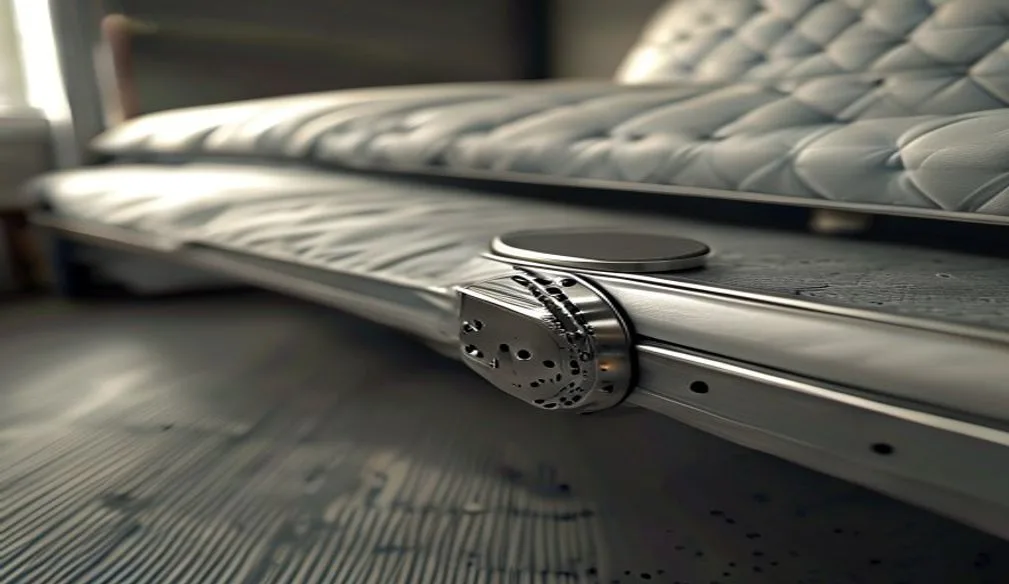
Bed bug interceptors placed under bed legs exploit their crawling limitation. These simple cups trap bugs attempting to climb up from the floor or fall down from the bed. They do not catch fleas, which would jump over them, or flying insects. A week of monitoring with interceptors confirms whether you're dealing with crawlers or something else.
What Actually Moves Through the Air in Bedrooms
If you see insects flying or jumping, consider these common misidentifications. Fleas have compressed bodies and powerful hind legs; they appear as dark specks that vanish in hops. Carpet beetles fly and resemble small, mottled ladybugs. Booklice crawl but are tiny and winged, often found on damp walls. Spider beetles scurry quickly and may trigger false alarms.
True bed bugs move deliberately. They do not scatter in random directions when disturbed—they seek the nearest dark crevice. Their gait is slow enough to photograph clearly. If your insect zigs, zags, or disappears in a blur, grab a photo and compare it to verified bed bug images before treating.
| Movement | Typical Location | |
|---|---|---|
| Bed bug | Crawls only; 3–4 ft/min | Mattress seams, furniture joints, baseboards |
| Flea | Jumps 100+ body lengths | Pets, carpets, near animal resting areas |
| Carpet beetle | Flies; attracted to light | Windowsills, closets, woolens |
| Booklouse | Crawls; weak flight possible | Damp walls, stored paper, moldy areas |
Preventing Spread When They Can't Fly
Their crawling limitation actually helps containment. Isolate your bed by pulling it six inches from walls and placing legs in interceptors. Eliminate bed skirts and floor-touching bedding that provides bridges. Seal cracks in walls, floors, and around pipes to block horizontal travel between rooms.
What I tell clients about travel: hard-sided luggage with wheels collects fewer hitchhikers than fabric bags. Store suitcases in hotel bathrooms or on luggage racks away from walls, never on beds or upholstered chairs. Upon return, dry all clothing on high heat before it enters your closet—this kills any crawlers that made the trip.
For multi-unit buildings, coordinated inspection matters more than individual treatment. Bed bugs will crawl back through wall voids if neighboring units remain infested. Document activity with dated photos and notify property management promptly. Professional heat treatment of the entire structure, or at least adjacent units, often succeeds where spot spraying fails.
When Professional Identification Helps
If interceptors catch specimens but you're uncertain, seal them in a clear bag or tape them to white paper for examination. Licensed pest control professionals can confirm species in minutes. Misidentification leads to wrong treatments—flea bombs do not control bed bugs, and bed bug protocols waste money on flying insects.
I often see DIY efforts fail because homeowners treated for "bugs" generally without knowing what moved, jumped, or flew. Accurate identification directs your effort: crawling insects need barrier methods and harbor elimination, while jumping or flying pests require entirely different approaches. Start with certainty, then act.
Frequently Asked Questions
How can I confirm bed bugs are gone after treatment?
Use a combination of monitoring methods over several weeks.
- Place interceptors on bed legs and check for trapped insects.
- Inspect common hiding spots with a flashlight and magnifier if available.
- Look for new cast skins, tiny dark spots (fecal stains), or live bugs.
Continue monitoring and follow up with your pest professional if signs return.
How long do bed bugs live without a blood meal?
Bed bugs can survive several months without feeding, though many live closer to 5–6 weeks under typical home conditions. Factors like temperature, humidity, and life stage influence their survival time.
Are bed bugs active during the day?
Bed bugs are primarily nocturnal and prefer to feed at night. However, they can become active during the day if hungry, crowded, or if their nighttime host schedule changes.
What are signs of bed bugs in luggage after travel?
After travel, check luggage and nearby areas for bed bug signs such as tiny brown spots (fecal marks), pale shed skins, small eggs or eggshells, and live or flattened bugs. Early detection can help prevent establishing an infestation in your home.